

There’s a word I wish I’d known sooner.
It sounds almost pretty when you say it out loud. Schadenfreude. Damage-joy. Like something pressed between the pages of an old book.
It isn’t pretty.
It’s the little flicker you feel when a colleague gets the promotion and, just for a second, you hope it won’t last. It’s the quiet relief when the influencer stumbles. It’s the neighbour’s new car, and that small, ugly hope that the payments might catch up with them.
We don’t always celebrate their success. Sometimes we wait for the stumble. And when it comes, something in us relaxes — like a scoreboard has quietly reset, and for a moment we feel safe again.
Can I sit with you in that for a minute? Because I know that flicker. It lives closer than I like to admit.
We crave justice. That’s not a flaw. It’s stitched into us. We believe wrongs should be answered. That’s a fingerprint of the One who made us.
But justice and schadenfreude can wear the same coat. From the outside they look almost the same. The difference is in the heart. Justice wants the wrong made right. Schadenfreude just wants the person down.
And “down,” I’ve learned, is often about control. When someone is beneath you, you can manage them. You can tell their story. You can keep them small enough that your own story still feels tall. Restored means beside you. And beside you is a relationship you can’t manage.
That’s why I’m taking you back to a dusty road in Judea. Not as a legend. As a record you can actually look at.
Where I first saw it
It happened under a real sky, with real Roman soldiers and a real Roman governor.
Here’s the part that still steadies me. The men who had every reason to dismiss it wrote it down anyway.
A Roman historian, writing about eighty years later, recorded that the founder of this strange little movement was executed by the governor Pontius Pilate, in the days of Emperor Tiberius. A Jewish historian from that the same century mentioned him too, and in a line almost no one disputes – named his brother James.
Another paragraph of his notes the crucifixion under Pilate; some of that wording was later touched by Christian scribes. The core notice is still there.
These weren’t fans. They had every reason to wave him away. They didn’t. When people who are not trying to protect your story still confirm the basic facts, those facts stop being a matter of taste. They become something you can investigate.
The week itself comes to us in four voices — Matthew, Mark, Luke and John. They tell the same days, the same cries. You don’t have to start with faith. You can start with the documents. Weigh them. See if they hold.
It begins on a Sunday.
Picture the road into Jerusalem, warm with spring dust. Jesus rides in on a donkey — not a war horse. A humble little beast, the kind a poor man might borrow. The crowds throw cloaks on the ground, wave palm branches, and shout, “Hosanna to the Son of David! Blessed is he who comes in the name of the Lord!” You can almost hear the children running ahead. The old promise from Zechariah. The old cry from Psalm 118. Walking into the street.
By Friday, the label had done its work.
The religious leaders had already decided he had to go. They hunted for witnesses, but the stories wouldn’t line up. So they asked him straight:
“Are you the Messiah, the Son of the Blessed One?” He answered plainly. “I am.”
They tore their robes — not in grief, but in triumph — and called it blasphemy. Mark writes it down in chapter 14. No real argument. Just the category. Once the word stuck, the man disappeared.
Then the soldiers took him. Mark 15 says they put a purple robe on him, twisted together a crown of thorns, and began to call out, “Hail, king of the Jews!”
They struck him. They spat on him. They knelt in mock worship.
That’s schadenfreude in a uniform. The pleasure of watching the one who threatened their order finally fall.
Before Pilate, the same city that had waved the palms now shouted, “Crucify him!” Pilate found no basis for a charge. (Luke 23:34) The pressure won anyway. Five days. From “Hosanna” to “Crucify.” That’s how fast a label can erase a person.
We still do this. To people of faith. To people of success. To anyone who unsettles where we stand. We call it caution, or cleverness, or “just being realistic.” Sometimes it is. Sometimes it’s fear that doesn’t want to look at itself.
Naming it is the first step. You can’t fight what you refuse to see. And once you see it — in yourself, in the crowd, in the headlines — it loses some of its grip. Grace does that. It names the thing, then sets the person free.
The crowd chose crucifixion because a dead Jesus was a story they could control. A risen one was a relationship they couldn’t. That’s the difference between wanting someone down and wanting them restored. It’s the difference grace keeps asking us to choose.
And here is the part that breaks the pattern.
Even as they drove the nails in, he prayed for them. Luke 23:34: “Father, forgive them, for they do not know what they are doing.”
They wanted him down. He wanted them free.
That’s not a story you can manage. That’s a love you have to look at.

So I’m not asking you to swallow a slogan. I’m asking you to investigate the man who forgave the people who took joy in his fall. Read the week. Weigh the witnesses. Sit with the prayer from the cross.
If he is who the records say he is, schadenfreude doesn’t get the last word. He does.
For Further Reading:
John Stott, The Cross of Christ — why the cross is not just sad, but the centre
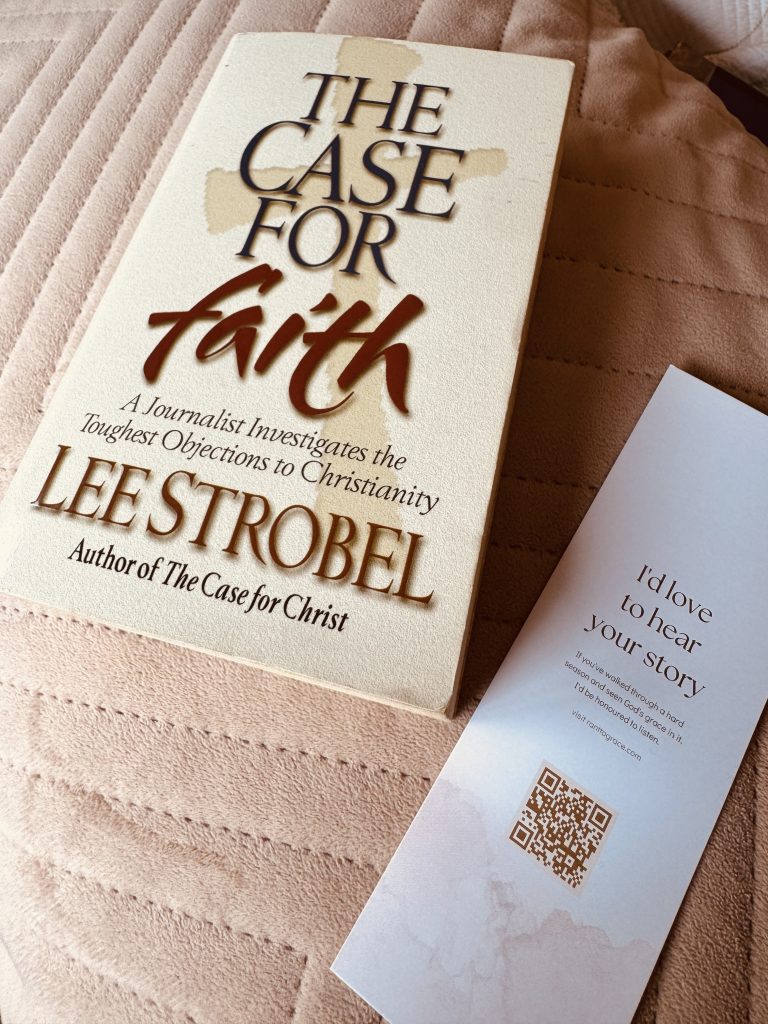
Lee Strobel, The Case for Christ — a journalist’s walk through the same kind of questions
Bibliography
Tacitus. Annals 15.44.
Josephus. Antiquities of the Jews 18.3.3; 20.9.1.
The Holy Bible, New International Version. Mark 14–15; Luke 23:34; Matthew 21; 27; John 12; 19; Zechariah 9:9; Psalm 118.
Montgomery, John Warwick. History, Law and Christianity. Canadian Institute for Law, Theology and Public Policy.
Stott, John. The Cross of Christ. Inter-Varsity Press, 1986.
Strobel, Lee. The Case for Christ. Zondervan, 1998.
Leave a Reply