Can I tell you something small first?
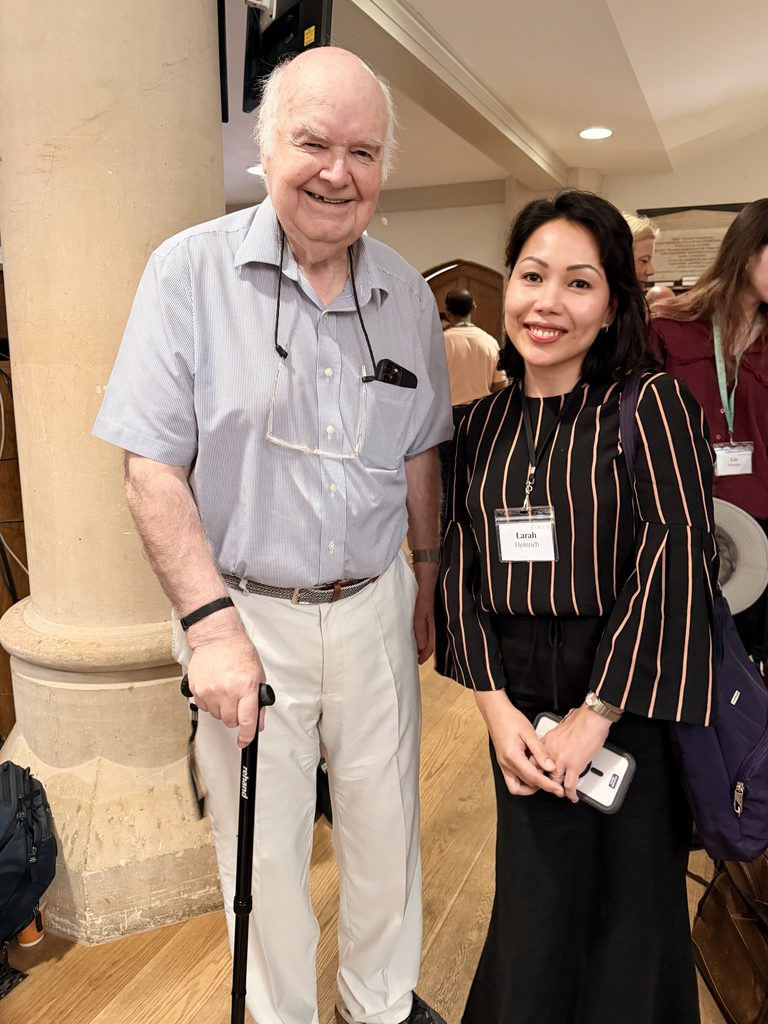
I still have the photograph from Oxford. I’m standing next to John Lennox after a lecture session at the OCCA Summer School. I was staying at New College that week. I don’t need to explain the picture. If you’ve ever had a week that quietly rearranged you, you’ll know what I mean.
I bought a little book for that week: Can Science Explain Everything? (Lennox, 2019). It isn’t thick, but I didn’t rush it. I read it slowly in my room at New College, shoes off, the window open on an English summer that was not as gentle on my feet as it looked. I wanted the words to settle, not just pass through.

Lennox doesn’t raise his voice. He just thinks out loud. He takes science seriously, then keeps coming back to the questions science by itself cannot finish. Why is there something rather than nothing? Why does mathematics describe the world so well? Why can we understand the universe at all?
I already believed there is a Mind behind it. That book didn’t give me a new God. It gave me better words for something I already knew — and it helped me see I don’t have to put science down to keep hold of Him.
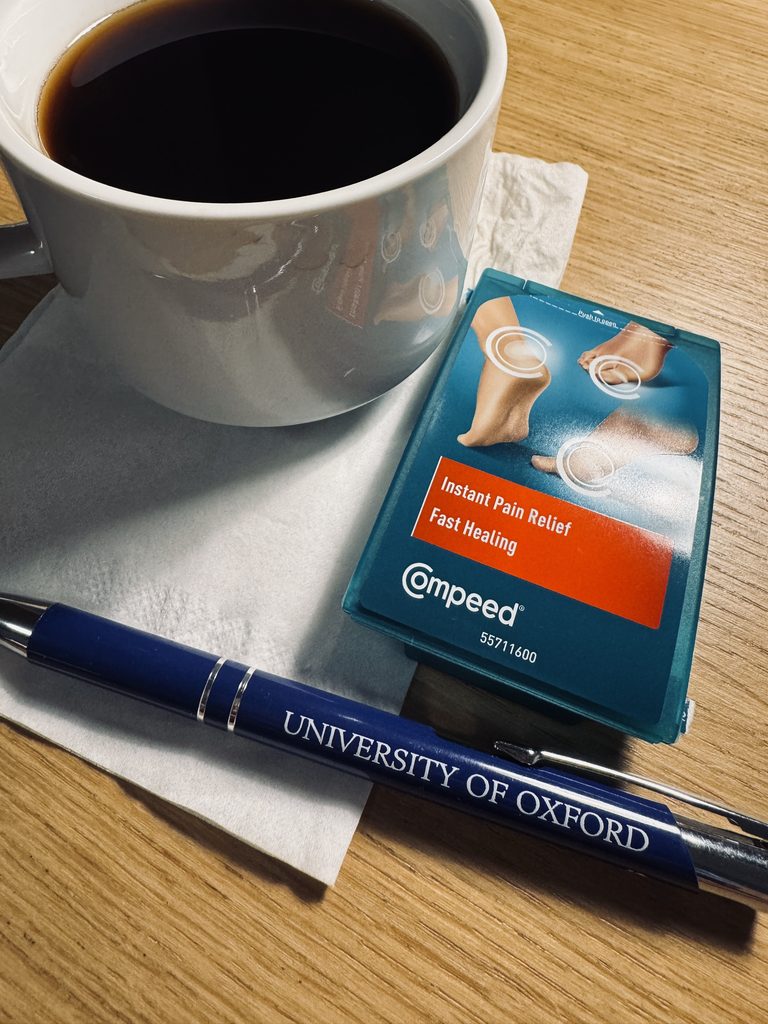
There were blisters too. Proper ones. Oxford stone is hard if you pack the wrong shoes, and by the third day I was limping between lectures and laughing at myself. I came for clarity. God, as He often does, included the feet. Sometimes faith isn’t only what we think. It’s what we keep walking toward when it costs a little.
I had come with questions I hear all the time at work and at church. How do we know God is real? How do you speak about Jesus when “religion” makes people shut the door? How do you hold hope when the news makes faith look foolish?
Then I met a woman who is an astrophysicist.
She said the galaxy is like a symphony. The more she studies it, the more she finds herself in awe — because the facts keep sitting down beside what Scripture has been saying all along. She wasn’t trying to be poetic. She’d spent years with the data. Order. Structure. A world that can be read.
That isn’t a new idea. It’s an old one.
“The heavens declare the glory of God,
and the sky above proclaims His handiwork.”
(Psalm 19:1, ESV)
David wasn’t writing a science paper. He was a shepherd who looked up. And what he saw wasn’t a blank roof. The sky keeps pointing past itself. Day after day it tells the same quiet truth: this world didn’t make itself.
Paul says it another way:
“For His invisible attributes, namely, His eternal power and divine nature, have been clearly perceived, ever since the creation of the world, in the things that have been made.”
(Romans 1:20, ESV)
Creation isn’t silent. God has left a witness in what He made. That doesn’t save anyone on its own. But it does mean we don’t start in total darkness. The world is already saying something.
That little book on the windowsill helped me say this without feeling silly. Science hasn’t buried God. If anything, the more carefully we look, the more the handwriting shows.
Then I started Lennox’s later book, God, AI and the End of History (Lennox, 2025).
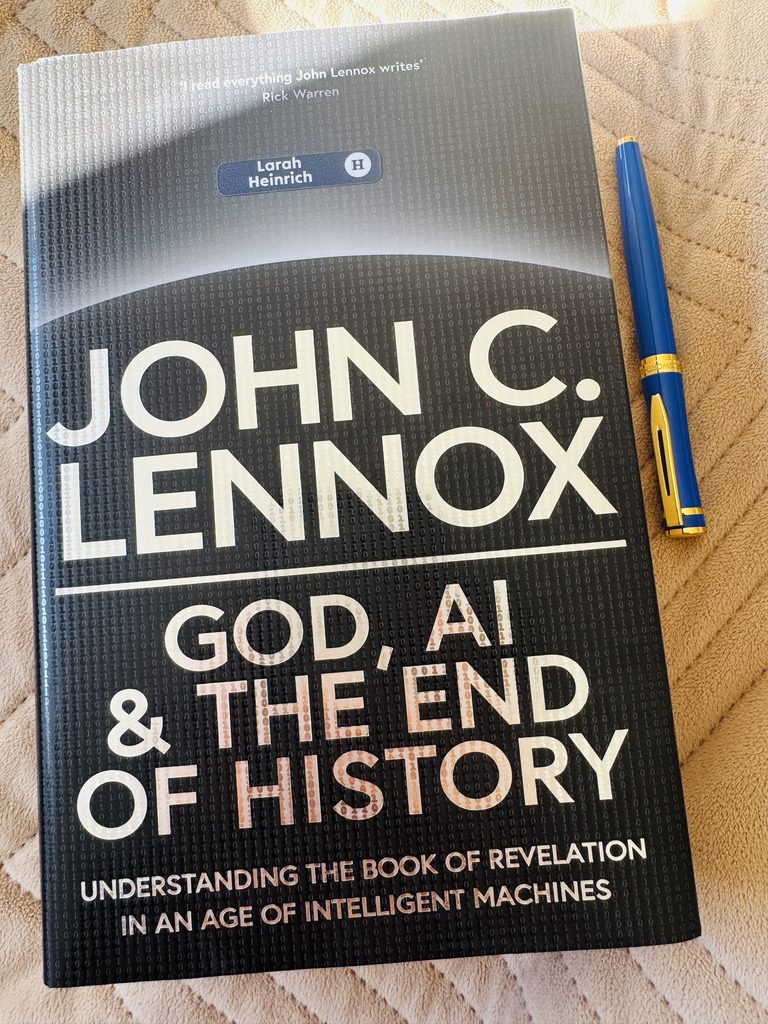
This one sits heavier in the hand. It’s less about whether science and faith can share a table, and more about what happens when we start treating our own inventions as if they could play God. Lennox reads Revelation not like a code to crack, but like a warning about an old hunger in us — to create ourselves, to outrun death, to manage everything.
AI isn’t the beast. It’s a strong amplifier of that hunger. It can help a neighbour. It can also feed control. The real question was never only the tool. It’s who we worship.
That’s the thread between the two books, and it’s older than both of them.
The small book reminds me the universe isn’t a closed machine. The larger one reminds me that the God who made it isn’t threatened by any machine we build. I am grateful for both books. They are not the gospel — and I don’t think Lennox would want them to be. They just helped me look at Jesus again with a steadier mind.
Wonder at the sky is a good place to begin. The Christian claim goes further: God has spoken, and Jesus Christ rose from the dead in history.
I’m not a lawyer. I’m a chaplain, a wife, and a mum. But I’ve learned to ask of the resurrection what I’d ask of any serious claim: What kind of testimony is this?
The first witnesses don’t look like people inventing a story that made them look good. They run. They deny Him. They doubt. If they were tidying up a legend, they would have cleaned that up. They didn’t. And then, in the same city where the claim could have been most easily shut down, frightened people started speaking as if death no longer had the last word.
None of that forces anyone to believe. Evidence isn’t a substitute for faith. It is a reason not to be ashamed of it. In Scripture, faith isn’t a blind jump into the dark. It’s trust in Someone who has already come into the light.
I came home from Oxford with three books, sore feet, and a clearer mind. And I came home with a photograph.
What I want to keep isn’t the week. It’s the Lord the week kept pointing to — the God whose glory the heavens still declare, and the Christ who doesn’t need upgrading when the technology changes.
He is the same. That’s the help I needed. That’s the help I want to pass on.
A prayer
Lord, for the one who wonders if faith is only a feeling, open their eyes to what You have already written into the world. For the believer who feels small beside science, or frightened beside machines, remind them You are not threatened. Hide their life in Christ again. Give them courage to keep walking toward You, even when it costs a little. In Jesus’ name, Amen.
Bibliography
Lennox, J.C. (2019) Can Science Explain Everything? : The Good Book Company.
Lennox, J.C. (2025) God, AI and the End of History: Understanding the Book of Revelation in an Age of Intelligent Machines. London: SPCK.
The Holy Bible, English Standard Version (2001) Wheaton, IL: Crossway.


Leave a Reply